
Jenkins Court Release Records
Jenkins County Courthouse is a post-custody record location, not a detention facility. A judge's order or docket event may explain why someone bonded out, was released on recognizance, received time served, had a charge dismissed, began probation, was remanded to custody, or transferred after sentencing. The jail record documents the physical custody event. The court record documents the legal action behind it.
That difference matters when a person no longer appears in a jail system. A docket entry can persist after a live custody view changes. For bond release, it may show the bond order and future hearing. For a sentence, it may identify jail time, probation, or commitment to GDC. For a dismissal, it may show the disposition that removed the basis for detention. Court access varies by case, court, and any restriction or sealing order.
| Court event | What it may explain | Second source |
|---|---|---|
| Bond order | Authority for pretrial release | Sheriff release entry |
| Disposition or dismissal | Case outcome affecting custody | Jail record |
| Sentence | Time served, probation, or GDC commitment | Sheriff or GDC record |
| Revocation or warrant | Return-to-custody authority | Supervision and custody source |
Confirm a Jenkins Release Order
Start with the Georgia re:SearchGA portal and use the defendant's legal name. Search access and document availability can vary, so an online result may not be the complete clerk record. The Jenkins County release search links the court layer to custody sources.
- Search the defendant name and narrow by Jenkins County, case number, or filing details when available.
- Open the matching case and compare identifying details rather than relying on a name alone.
- Read docket events for bond, disposition, plea, sentence, probation, revocation, warrant, or later order.
- Contact the responsible clerk when the event or document is not public online, identifying the exact case and record sought.
- Confirm the physical release separately with the sheriff for county jail custody or GDC for state prison custody.
Jenkins Court Record Access
The research identifies the statewide re:SearchGA public court route, but it does not supply a verified courthouse street address, phone number, or office hours for use here. Those details are therefore not inferred. Use the portal to identify the case and responsible court, then follow the official court or county directory contact shown for that office.
Jenkins County courts and clerk officesGeorgia re:SearchGA court search
Verify the correct court and clerk for the case
A focused request should state the case number if known, defendant name, filing or event date, and the document sought. Examples include a bond order, sentencing order, disposition, probation order, revocation, dismissal, or docket sheet. Georgia's Open Records Act supplies a general public-record framework, but access rules and court-record procedures can differ from ordinary agency records.
Jenkins Courthouse Record Role
The Jenkins County courthouse layer holds legal history rather than people. Court fields may include case number, defendant name, filing date, charges, docket events, warrants, bonds, disposition, plea or adjudication, sentence, probation, revocation, and orders. Not every field appears in every case, and restricted or sealed material may not be publicly visible.
A court result should not be mistaken for current custody status. An old warrant may have been resolved. A sentence can include later amendments. Probation may have ended or been revoked. A bond order may precede another hold. Read the event chronology and compare it with the office that controlled custody at the relevant time.
Jenkins Release Docket Fields
The case timeline is often the most useful part of a court release inquiry. A single result can show many events, but the event labels need context. “Disposition” means the case outcome. “Remand” means an order returning a person to custody. “Revocation” means cancellation of probation or another conditional status after a violation finding. “Record restriction” can limit public access under Georgia law.
- Bond
- A financial or nonfinancial condition tied to pretrial release.
- Disposition
- The resolved outcome of a charge or case.
- Probation
- Court-ordered community supervision instead of, or after, custody.
- Revocation
- A court action withdrawing conditional liberty or supervision status.
- Restriction or sealing
- A legal limit on public record visibility.
The docket can explain authority, yet the custodian records execution. If an order says time served, ask the jail when release processing ended. If the sentence commits the person to GDC, search the GDC active record after transfer. If the order imposes probation, use the court and DCS channels for later supervision status.
Search Jenkins Court Records
The official re:SearchGA search entry is the manifest-matched source for Jenkins County court-release verification.
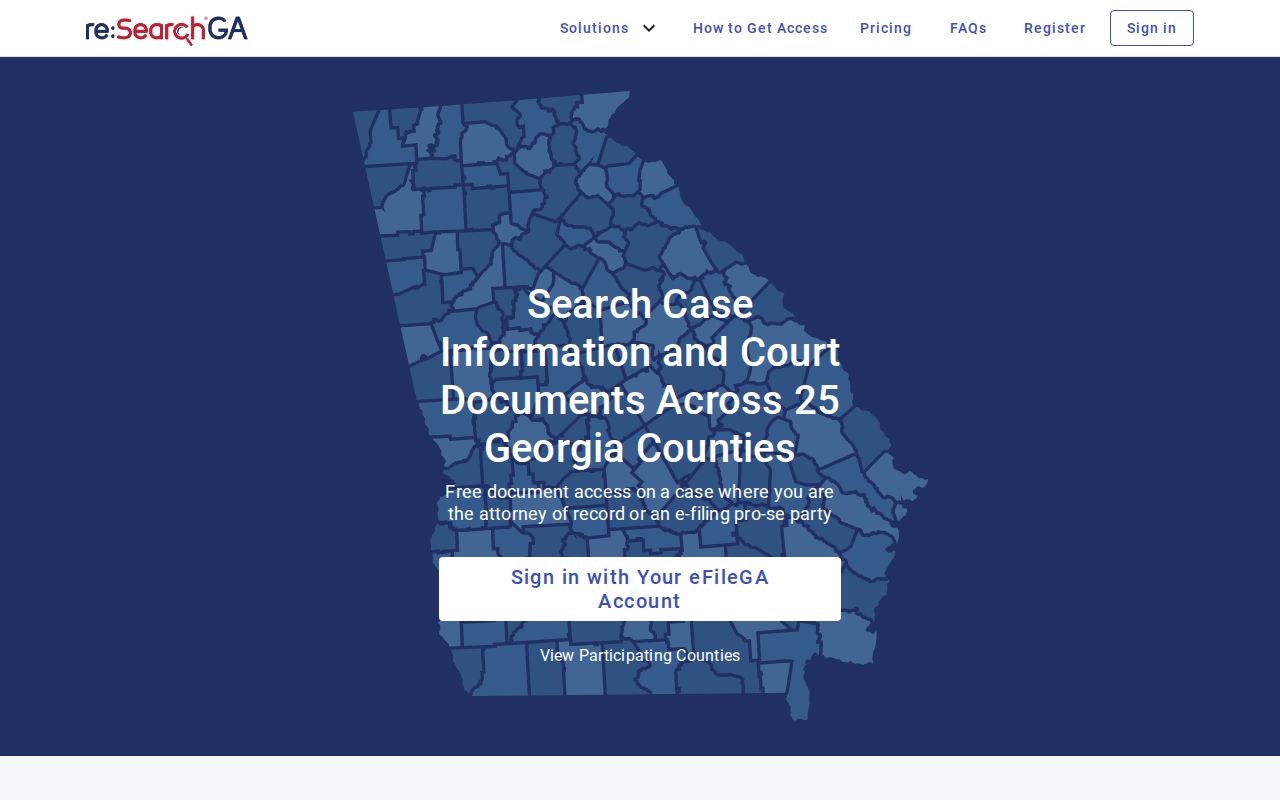
The portal supports the court side of verification. A sheriff or GDC source is still needed to confirm the person's physical custody status.
Jenkins County Custody Layers
A Jenkins County court case can connect to either local or state custody. For a local arrest and jail release, pair the docket with the Jenkins County Jail record route. If the sentence sends the person to state prison, pair it with the Jenkins Correctional Facility and GDC route. The court says what was ordered; the corrections agency says where and how custody was carried out.
Conviction county and placement location are different. A Jenkins County sentence may be served outside the county. Jenkins Correctional Facility can hold someone convicted elsewhere. Use the case number and GDC ID, when available, to keep those identities and systems aligned.
Jenkins Orders, Transfers, and Holds
No federal prison or ICE detention center was found in Jenkins County, but a court record can still reveal federal proceedings, another agency's warrant, or transfer authority. A local jail transfer to GDC, another county, the U.S. Marshals Service, BOP, or ICE ends Jenkins County custody without necessarily releasing the person to the community.
If the docket or sheriff identifies a federal path, the BOP locator may help after designation, while U.S. Marshals prisoner operations explains pre-designation movement. For immigration detention, check the ICE detainee locator. Each is a fallback for a named receiving authority, not a substitute for the Jenkins County case record.
Note: “Released from Jenkins County custody” should not be read as “released to the community” when another agency accepted the person.
Jenkins Court Record Limits
Online court access is useful but does not guarantee that every pleading, order, or identifier is visible. Access may vary by court, case type, document, and legal restriction. A sealed or restricted item may be absent even when a public docket event remains. Georgia's record-restriction framework can affect public visibility, and the clerk should be asked about the lawful access route rather than pressed to disclose protected content.
An incomplete online timeline is a reason to verify, not a reason to invent the missing event. Ask for the docket sheet or named order. Give the clerk a useful date range and case identifier. If the request concerns the physical release time or receiving agency, redirect that part to the sheriff or GDC because it belongs to the custody record.
Later events can also change the meaning of an earlier order. Probation can be modified or revoked. A warrant can be recalled. A sentence can be amended. Read the full sequence through the date relevant to the inquiry rather than treating the first release-related line as the current status.
Match Jenkins Release Documents
A sound court-and-custody match uses more than a person's name. Compare the case number, charge, court, order date, booking period, and any GDC identifier. For county custody, ask whether the sheriff's release reason names the same court action. For a GDC commitment, compare conviction county and offense information with the sentencing record, while remembering that the prison location can differ.
Probation and parole require another distinction. The court orders probation; the parole Board decides parole for eligible state cases. DCS can supervise both in the community. If the docket says probation, do not recast it as parole merely because prison custody ended. If GDC and Board sources show parole, do not describe it as a county jail bond release.
The most reliable conclusion states exactly what each source proves: the court authorized or recorded an outcome, the jail logged a local release or transfer, GDC recorded state status, and a supervision agency carried any community conditions.